FoodReference.com (since 1999)
COOKING TIPS AND HINTS SECTION
Home | Articles | Food Trivia | Today in Food History | Food Timeline | Recipes | COOKING_TIPS | Food Quotes | Who’s Who | Culinary Schools & Tours | Food_Trivia_Quizzes | Food Poems | Free Magazines | Food Festivals and Events
Cooking and Kitchen Tips and Hints, Measurements, Shopping Advice, Serving Ideas, etc.

See also: Article on Papaya; Papaya Trivia
Papaya
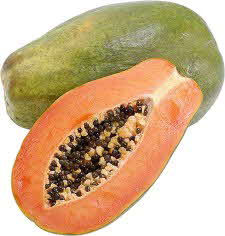
Use papayas to make a hot and spicy salsa.
Blend papaya with milk, yogurt, or orange juice for a breakfast smoothie.
Puree papaya to make a delicious salad dressing or base for ice cream or sorbet.
Add papaya slices to honeydew, melon, and strawberries to make a colorful fruit cup or salad.
Papayas are a rich source of vitamin A and C. One half of a small papaya can provide 150% of the recommended dietary intake of Vitamin C. It is low in calories, fat free, cholesterol free, and a good source of potassium, folate, and fiber.
Selection - Look for papayas that are partly or completely yellow in color, depending on variety, that give slightly to pressure, but are not soft at the stem-end. Avoid papayas that are bruised, shriveled, or have soft areas. Papayas that are hard and green are immature and will not ripen properly. Uncut papayas have no smell. Papayas that are cut should smell sweet, not bad or fermented.
Storage - Slightly green papayas will ripen quickly at room temperature, especially if placed in a paper bag. As the papaya ripens, it will turn from green to yellow. Place ripe papayas in a plastic bag and store in the refrigerator. Papayas will keep for up to a week, but it's best to use them within a day or two.
Varieties - There are two types of papayas, the Hawaiian and Mexican.
• The Hawaiian varieties also known as Solo papayas, are found most often in supermarkets. These fruits are pear shaped, weigh about a pound each, and have yellow skin when ripe. The flesh is bright orange or pinkish, depending on the variety.
• The Mexican varieties are not as common but can be found in Latino supermarkets. Mexican papayas are much larger then the Hawaiian types and can weigh up to 20 pounds and be more than 15 inches long. Although the flavor is less intense than the Hawaiian varieties, they are still delicious and enjoyable.
CDC.gov - 5 a Day
COOKING TIPS
Please feel free to link to any pages of FoodReference.com from your website.
For permission to use any of this content please E-mail: james@foodreference.com
All contents are copyright © 1990 - 2025 James T. Ehler and www.FoodReference.com unless otherwise noted.
All rights reserved. You may copy and use portions of this website for non-commercial, personal use only.
Any other use of these materials without prior written authorization is not very nice and violates the copyright.
Please take the time to request permission.