See also: Article on Papaya; Kitchen Tips
PAPAYA
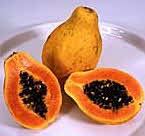
The exact origination of papaya is unknown but it is believed to be native to southern Mexico and neighboring Central America. The papaya is a melon like fruit with yellow-orange flesh enclosed in a thin skin that varies in color from green to orange to rose.
CDC.gov - 5 a Day
The papaya tree can grow from seed to a 20 foot, fruit bearing tree in less than 18 months. The fruit can range in size from 1 to 20 pounds.
The white powder sold as "Meat Tenderizer" is composed mainly of an enzyme extract from the papaya, called papain, usually with added salt, sugar and anticaking agents. The enzyme papain, breaks down tough meat fibers. Papaya juice has been used for centuries in South America to tenderize meat.
Varieties - There are two types of papayas, the Hawaiian and Mexican.
The Hawaiian varieties also known as Solo papayas, are found most often in supermarkets. These fruits are pear shaped, weigh about a pound each, and have yellow skin when ripe. The flesh is bright orange or pinkish, depending on the variety.
The Mexican varieties are not as common but can be found in Latino supermarkets. Mexican papayas are much larger then the Hawaiian types and can weigh up to 20 pounds and be more than 15 inches long. Although the flavor is less intense than the Hawaiian varieties, they are still delicious and enjoyable.
CDC.gov - 5 a Day

You are here > Home > FOOD TRIVIA & FACTS >
Please feel free to link to any pages of FoodReference.com from your website.
For permission to use any of this content please E-mail: james@foodreference.com
All contents are copyright © 1990 - 2025 James T. Ehler and www.FoodReference.com unless otherwise noted.
All rights reserved. You may copy and use portions of this website for non-commercial, personal use only.
Any other use of these materials without prior written authorization is not very nice and violates the copyright.
Please take the time to request permission.
FOOD TRIVIA and FOOD FACTS
Also see: Food Articles and Cooking Tips
Popular Pages
Home | Articles | FOOD TRIVIA | Today in Food History | Food Timeline | Recipes | Cooking_Tips | Food Quotes | Who’s Who | Culinary Schools & Tours | Food_Trivia_Quizzes | Food Poems | Free_Magazines | Food Festivals & Events

FoodReference.com (since 1999)
FOOD TRIVIA and FOOD FACTS SECTION