See Also Articles: Pistachio Nuts;
and Health Benefits of Pistachios
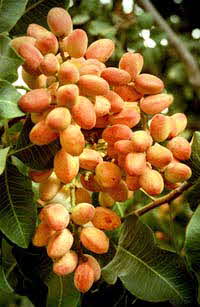
PISTACHIO NUTS
There are 33 people in the U.S. listed on whitepages.com with the last name 'Pistachio'
(Mark Morton, 'Gastronomica', Fall 2010)
The Pistachio nut is a member of the Cashew family, which also includes sumac, mango and poison ivy.
Pistachios have been cultivated for over 7,000 years and are mentioned in the Old Testament of the Bible. They are popular in Greece, and are used there in many pastries.
Legend has it that the Queen of Sheba decreed pistachios an exclusively royal food, going so far as to forbid commoners from growing the nut for personal use. Nebuchadnezzar, the ancient king of Babylon, had pistachio trees planted in his fabled hanging gardens.
In the first century A.D., the Emperor Vitellius debuted this prized nut in his capital city of Rome.
According to Moslem legend, the pistachio nut was one of the foods brought to Earth by Adam.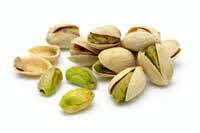
Pistachio production in the U.S. was 346 million pounds in 2004. The U.S. is the world's 2nd largest producer of pistachios, Iran is the largest.
Pistachios are one of only two nuts mentioned in the Bible (Genesis 43:11) the other being almonds.
Pistachios are also called the 'green almond' and are known as the 'smiling nut' in Iran and the 'happy nut' in China.
In the U.S. pistachios were dyed red to disguise imperfections in the shells and to make the nuts stand out in vending machines.
Pistachio Ice Cream was supposedly created by James W. Parkinson in the 1840s.
The Moghul Emperor, Akbar the Great, hosted lavish banquets befitting his royal status. The chickens to be killed for the banquet were fed pistachio nuts for 6 to 8 weeks before the banquet, to add a delicious flavour to the chicken meat.
(from Newsletter Subscriber, Surekha Laxmann Gholap)

You are here > Home > FOOD TRIVIA & FACTS >
Please feel free to link to any pages of FoodReference.com from your website.
For permission to use any of this content please E-mail: james@foodreference.com
All contents are copyright © 1990 - 2025 James T. Ehler and www.FoodReference.com unless otherwise noted.
All rights reserved. You may copy and use portions of this website for non-commercial, personal use only.
Any other use of these materials without prior written authorization is not very nice and violates the copyright.
Please take the time to request permission.
FOOD TRIVIA and FOOD FACTS
Also see: Food Articles and Cooking Tips
Popular Pages
Home | Articles | FOOD TRIVIA | Today in Food History | Food Timeline | Recipes | Cooking_Tips | Food Quotes | Who’s Who | Culinary Schools & Tours | Food_Trivia_Quizzes | Food Poems | Free_Magazines | Food Festivals & Events

FoodReference.com (since 1999)
FOOD TRIVIA and FOOD FACTS SECTION