See also article on Plantains
PLANTAINS
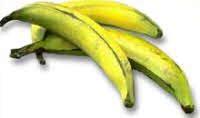
This popular banana in Latin American, Caribbean, and Asian countries is often referred to as a cooking banana. Plantains resemble bananas but they are longer in length, thicker skinned, and starchier in flavor. In most countries, plantains are used more like a vegetable than a fruit. They are not suitable for eating raw unless very ripe, when they turn completely black.
One half of a large plantain is low in sodium, high in potassium and vitamin A, and a good source of fiber.
This versatile fruit has three unique stages when they can be eaten:
- Green plantains taste more like a potato with a starchy texture. At this stage, the interior is yellowish or slightly pink. The fruit is firm and is often used as side dishes.
- Yellow plantains are the middle stage of the fruit. These plantains can have some brownish-black spots. Their role now is both vegetable and fruit and is used in dishes that request for a slightly sweet taste and firm texture.
- Black plantains are typically found in sweeter recipes. These plantains are all black or spotty black and are soft. Black plantains can be eaten out of hand.

You are here > Home > FOOD TRIVIA & FACTS >
Please feel free to link to any pages of FoodReference.com from your website.
For permission to use any of this content please E-mail: james@foodreference.com
All contents are copyright © 1990 - 2025 James T. Ehler and www.FoodReference.com unless otherwise noted.
All rights reserved. You may copy and use portions of this website for non-commercial, personal use only.
Any other use of these materials without prior written authorization is not very nice and violates the copyright.
Please take the time to request permission.
FOOD TRIVIA and FOOD FACTS
Also see: Food Articles and Cooking Tips
Popular Pages
Home | Articles | FOOD TRIVIA | Today in Food History | Food Timeline | Recipes | Cooking_Tips | Food Quotes | Who’s Who | Culinary Schools & Tours | Food_Trivia_Quizzes | Food Poems | Free_Magazines | Food Festivals & Events

FoodReference.com (since 1999)
FOOD TRIVIA and FOOD FACTS SECTION