FoodReference.com (since 1999)
COOKING TIPS AND HINTS SECTION
Home | Articles | Food Trivia | Today in Food History | Food Timeline | Recipes | COOKING_TIPS | Food Quotes | Who’s Who | Culinary Schools & Tours | Food_Trivia_Quizzes | Food Poems | Free Magazines | Food Festivals and Events
Cooking and Kitchen Tips and Hints, Measurements, Shopping Advice, Serving Ideas, etc.

See also: Article on Melons
Crenshaw Melon
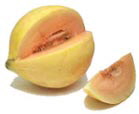 Crenshaw Melons - These melons can weigh up to ten pounds and deliver a unique sweet and spicy flavor. They are a hybrid between the casaba and Persian melon with a yellowish skin and salmon colored flesh. Peak season for Crenshaw melons is August through September, with the fruit season beginning in July and ending in October.
STORAGE - Keep uncut melons at room temperature for two to four days or until fully ripe, then refrigerate for up to 5 days. Refrigerate cut up melon in a covered container up to 3 days. Remember that cut melons are aromatic and their smell will penetrate other foods.
PREPARATION - Melon preparation is easy! Always wash melons in warm soapy water before cutting to get rid of any impurity on the rind that might be carried from the knife blade to the flesh. Simply cut the melon in half and scoop out the seeds and strings. Melons can be cut into halves, quarters, wedges, cubes, or scooped into balls with a melon baller. Most melons will benefit from a squeeze of lemon or lime juice to enhance the flavor and served at room temperature.
CDC.gov - 5 a Day
COOKING TIPS
Please feel free to link to any pages of FoodReference.com from your website.
For permission to use any of this content please E-mail: james@foodreference.com
All contents are copyright © 1990 - 2025 James T. Ehler and www.FoodReference.com unless otherwise noted.
All rights reserved. You may copy and use portions of this website for non-commercial, personal use only.
Any other use of these materials without prior written authorization is not very nice and violates the copyright.
Please take the time to request permission.