See also: Beet-ing the French; Beet Cooking Tips
BEETS and BEETROOT
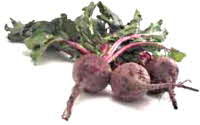
Beet: A biennial Eurasian plant of the goosefoot family, usually having a swollen edible root.
Beets (Beta vulgaris) are descendants of the wild sea beet of European coastal regions of the Mediterranean Sea and the Atlantic Ocean. Both Greeks and Romans cultivated beets. Originally cultivated for the leaves and later for the roots, it is uncertain exactly when they were first domesticated and when they began to be bred for their swollen roots.
An old Harper's Bazaar article says that beets are good for removing wrinkles and bags under the eyes.
The Sugar Beet was designated as the Official Historic Vegetable of Utah in 2002.
The beetroot comes in 3 colors:
· Red beets are grown for eating,
· White beets are mostly grown for producing beet sugar and
· Yellow beets (manglewurzel) are grown for livestock feed.
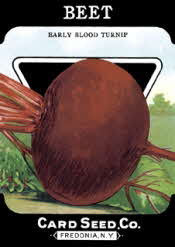
Today there are 4 distinct forms of cultivated beets, each one grown for a different purpose.
1) The beetroot or garden beet is grown for its edible root.
2) The leaf beet or Swiss Chard, grown for its edible leaves.
3) The sugar beet grown for its high (20%) sugar content and a major source of sugar.
4) The mangel-wurzel grown for livestock feed.
There are 15 people in the U.S. listed on whitepages.com with the last name 'Beet'
(Mark Morton, 'Gastronomica', Fall 2010)
Also see: Food Articles and Cooking Tips
You are here > Home >
Please feel free to link to any pages of FoodReference.com from your website.
For permission to use any of this content please E-mail: james@foodreference.com
All contents are copyright © 1990 - 2025 James T. Ehler and www.FoodReference.com unless otherwise noted.
All rights reserved. You may copy and use portions of this website for non-commercial, personal use only.
Any other use of these materials without prior written authorization is not very nice and violates the copyright.
Please take the time to request permission.
FOOD TRIVIA and FOOD FACTS

Popular Pages
CULINARY SCHOOLS
& COOKING CLASSES
From Amateur & Basic Cooking Classes to Professional Chef Training & Degrees
Home | Articles | FOOD TRIVIA | Today in Food History | Food_Timeline | Recipes | Cooking_Tips | Food Quotes | Who’s Who | Culinary Schools and Tours | Food_Trivia_Quizzes | Food Poems | Free Magazines | Food Festivals & Events
FoodReference.com (since 1999)
FOOD TRIVIA and FOOD FACTS SECTION