FoodReference.com (since 1999)
COOKING TIPS AND HINTS SECTION
Home | Articles | Food Trivia | Today in Food History | Food Timeline | Recipes | COOKING_TIPS | Food Quotes | Who’s Who | Culinary Schools & Tours | Food_Trivia_Quizzes | Food Poems | Free Magazines | Food Festivals and Events
Cooking and Kitchen Tips and Hints, Measurements, Shopping Advice, Serving Ideas, etc.

Cactus
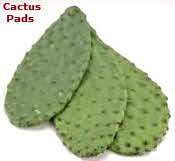
The edible prickly pear cactus has fleshy oval leaves (typically called pads or paddles) with a soft but crunchy texture that also becomes a bit sticky (not unlike okra) when cooked. Prickly pear cactus tastes similar to a slightly tart green bean, asparagus, or green pepper.
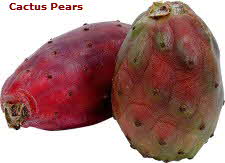
As part of the cactus plant, the prickly pear is a fruit that is 2 to 4 inches long and shaped like an avocado. Its skin is coarse and thick, not unlike an avocados and it ranges in color from yellow or orange to magenta or red. Tubercles with small prickly spines can be found on the prickly pear’s skin. This fruit’s flesh, which ranges in color also from yellow to dark red, is sweet and juicy with crunchy seeds throughout.
The prickly pear can be diced like pineapple and used as a topping on yogurt or cereal or blended into a smoothie.
AVAILABILITY, SELECTION, AND STORAGE ---
Edible cactus is available year-round with a peak in the mid-spring and the best season from early spring through late fall. When buying edible cactus, choose small, firm, pale green cacti with no wrinkling. Be sure to pick cacti that are not limp or dry. Very small paddles may require more cleaning because their larger proportion of prickers and eyes. Edible cactus can be refrigerated for more than a week if wrapped tightly in plastic.
Edible cactus is also sold as:
Canned — pickled or packed in water.
Acitrones — candied nopales, packed in sugar syrup and available in cans or jars.
PREPARATION --- The edible cactus you buy should be de-spined though you will need to trim the 'eyes,' to remove any remaining prickers, and outside edges of the pads with a vegetable peeler. Trim off any dry or fibrous areas and rinse thoroughly to remove any stray prickers and sticky fluid.
Edible cactus can be eaten raw or cooked. To cook, steam over boiling water for just a few minutes (if cooked too long they will lose their crunchy texture). Then slice and eat! Cactus can also be cut and sautéed in butter or oil for a few minutes.
Steamed cactus can be added to scrambled eggs and omelets, or diced fresh and added to tortillas. They can also be substituted for any cooked green in most dishes.
The pads can be served as a side dish or cooled and used in salads. They taste especially good with Mexican recipes.
COOKING TIPS
Please feel free to link to any pages of FoodReference.com from your website.
For permission to use any of this content please E-mail: james@foodreference.com
All contents are copyright © 1990 - 2025 James T. Ehler and www.FoodReference.com unless otherwise noted.
All rights reserved. You may copy and use portions of this website for non-commercial, personal use only.
Any other use of these materials without prior written authorization is not very nice and violates the copyright.
Please take the time to request permission.