SMELT
Smelt are any of about a dozen species of small (under 15 inches) silvery, oily fish in the Osmeridae family related to trout and salmon. They are found in cold northern waters, in the Atlantic, Pacific and most of the world's seas.
Smelt are characterized by a slender body and a small adipose (fleshy) fin on the dorsal surface of the body. They are mostly anadromous (migrating from saltwater to fresh water to spawn) but there are also marine and freshwater members.
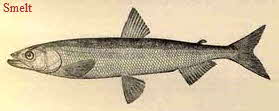
Smelt have fine, delicate flesh and a mild, rich distinctive flavor, with a smell akin to cucumbers. Fresh smelt are generally eaten bones and all -- just breaded (or floured) and fried crisp.
A Pacific species, the eulachon or candlefish, are so oily at spawning time they can be dried and burned as candles.
Kelso, Washington, is known as the Smelt Capital of the World.
Smelt are also harvested commercially for use in the manufacture of fishmeal, for fertilizer and fish oil.

You are here > Home > FOOD TRIVIA & FACTS >
Please feel free to link to any pages of FoodReference.com from your website.
For permission to use any of this content please E-mail: james@foodreference.com
All contents are copyright © 1990 - 2025 James T. Ehler and www.FoodReference.com unless otherwise noted.
All rights reserved. You may copy and use portions of this website for non-commercial, personal use only.
Any other use of these materials without prior written authorization is not very nice and violates the copyright.
Please take the time to request permission.
FOOD TRIVIA and FOOD FACTS
Also see: Food Articles and Cooking Tips
Popular Pages
Home | Articles | FOOD TRIVIA | Today in Food History | Food Timeline | Recipes | Cooking_Tips | Food Quotes | Who’s Who | Culinary Schools & Tours | Food_Trivia_Quizzes | Food Poems | Free_Magazines | Food Festivals & Events

FoodReference.com (since 1999)
FOOD TRIVIA and FOOD FACTS SECTION