See also: Kitchen Tips; Quotes; Celery Seeds
CELERY FACTS & TRIVIA
Two billion pounds of celery are grown each year in the U.S.
California produces more than 2/3rds of the celery grown in the U.S. and Florida produces about 20%.
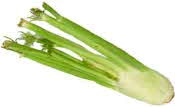
Celery is native to the Mediterranean and the Middle East, and was used by the ancient Greeks and Romans as a flavoring. The Ancient Chinese used it as a medicinal.
The celery that we all buy in the local supermarket is Pascal variety, first cultivated in 1874 in Michigan.
Using a celery stick to garnish a Bloody Mary originated in the 1960s at Chicago's Ambassador East Hotel. An unnamed celebrity got a Bloody Mary, but no swizzle stick. He grabbed a stalk of celery from the relish tray to stir his Bloody Mary and history was made.
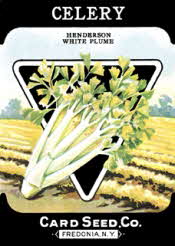
Supposedly, it takes more calories to eat and digest celery than there is in the celery.
Celery stalks, celery seed and celeriac (celery root) are each grown commercially from different varieties of the plant.
The wild form of celery is known as smallage. It has a bitter taste, and the stalks are more stringy than cultivated celery. Smallage was used in ancient times as a medicine, and the Romans used it as a seasoning. It was in the 17th and 18th centuries that celery was developed by breeding the bitterness out of smallage.
In it's 1897 catalog, Sears Roebuck & Co. advertised a celery nerve tonic for sale.
Also see: Food Articles and Cooking Tips
You are here > Home >
Please feel free to link to any pages of FoodReference.com from your website.
For permission to use any of this content please E-mail: james@foodreference.com
All contents are copyright © 1990 - 2025 James T. Ehler and www.FoodReference.com unless otherwise noted.
All rights reserved. You may copy and use portions of this website for non-commercial, personal use only.
Any other use of these materials without prior written authorization is not very nice and violates the copyright.
Please take the time to request permission.
FOOD TRIVIA and FOOD FACTS

Popular Pages
CULINARY SCHOOLS
& COOKING CLASSES
From Amateur & Basic Cooking Classes to Professional Chef Training & Degrees
Home | Articles | FOOD TRIVIA | Today in Food History | Food_Timeline | Recipes | Cooking_Tips | Food Quotes | Who’s Who | Culinary Schools and Tours | Food_Trivia_Quizzes | Food Poems | Free Magazines | Food Festivals & Events
FoodReference.com (since 1999)
FOOD TRIVIA and FOOD FACTS SECTION