FoodReference.com (since 1999)
COOKING TIPS AND HINTS SECTION
Home | Articles | Food Trivia | Today in Food History | Food Timeline | Recipes | COOKING_TIPS | Food Quotes | Who’s Who | Culinary Schools & Tours | Food_Trivia_Quizzes | Food Poems | Free Magazines | Food Festivals and Events
Cooking and Kitchen Tips and Hints, Measurements, Shopping Advice, Serving Ideas, etc.

DILL (Anethum graveolens)
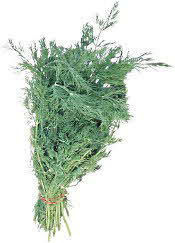
One pound of dill seed
= 4 cups
1 Tablespoon = 1/4 ounce
One pound of dillweed
= 10 cups
1 Tablespoon = 1/10 ounce
Dill Weed is more subtle and fresh in flavor than the seeds. It is characterized by sweet, green/grassy, tea-like and rye notes.
Description
Known for its feathery leaves and clean, fragrant lemon and anise aroma, dill is used as much as a garnish as it is a seasoning. Fresh leaves have the taste of anise and parsley.
Culinary Uses
Fresh dill pairs well with seafood, creamy sauces and vegetables such as beets, carrots, cucumbers, and potatoes. Many Scandinavian, Russian, German and Greek recipes call for dill. Wait until the end of cooking to add fresh dill, because it looses flavor when overheated. When using dill leaves, it is best to use fresh rather than dried to get the most flavor. Add finely chopped dill to potato salad, soups or rice for a fresh unique flavor. Mix dill, sour cream and horseradish for a great sauce for beef. Fresh dill combines well with basil, garlic, capers, horseradish, mustard, paprika and parsley.
Other Uses
According to some naturalists, the dill seeds contain a volatile oil that has a relaxant effect on muscles, especially those of the digestive tract, and has been used for centuries to cure such problems. Teas made with dill seed relieve indigestion and nausea, and produce a lulling effect.
Storing
Wrapped loosely in a plastic bag, dill will keep in the refrigerator for one week as long as the leaves are not wet. Dried dill will keep for up to 3 months if stored in a sealed container in a cool, dark place.
Fresh dill freezes well, Just put the feathery leaves in a plastic bag and freeze.
COOKING TIPS
Please feel free to link to any pages of FoodReference.com from your website.
For permission to use any of this content please E-mail: james@foodreference.com
All contents are copyright © 1990 - 2025 James T. Ehler and www.FoodReference.com unless otherwise noted.
All rights reserved. You may copy and use portions of this website for non-commercial, personal use only.
Any other use of these materials without prior written authorization is not very nice and violates the copyright.
Please take the time to request permission.