See also: Ginger Ale Trivia
Articles: Ginger; Ginger Field Report, India
GINGER
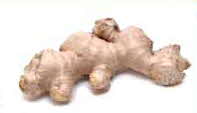
Ginger is a plant native to Asia. The warm, pungent, fragrant rhizome (enlarged underground stem) of this plant is used as a spice, either fresh or dried and powdered. Ginger oil is also used in fruit flavorings and perfumes. Ginger may be also be candied or pickled, and used to make tea and wine.
Ginger is the dried knobby shaped root of the perennial herb Zingiber officinale. The plant grows two to three feet tall. Once the leaves of the plant die, the thick roots, about 6 inches long, are dug up. Crystallized Ginger is fresh gingerroot cooked in syrup and dried.
Research has shown that ginger is more effective than Dramamine in combating motion sickness.
Ginger derives its name from a Sanskrit word meaning horn-shaped or horn root.
From as early as the sixth century, B.C., people have used ginger for a variety of purposes. In ancient times, it was thought to have healing properties.
During the Middle Ages, European ladies of the royal courts presented ginger to their knights prior to jousts. The ginger was meant to bring the knights luck.
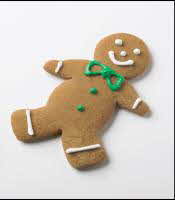
During the 15th century, gingerbread became a gift of love and respect. In the 1800's, Ginger was commonly sprinkled on top of beer or ale, then stirred into the drink with a hot poker - thus the invention of ginger ale.
Also see: Food Articles and Cooking Tips
You are here > Home >
Please feel free to link to any pages of FoodReference.com from your website.
For permission to use any of this content please E-mail: james@foodreference.com
All contents are copyright © 1990 - 2025 James T. Ehler and www.FoodReference.com unless otherwise noted.
All rights reserved. You may copy and use portions of this website for non-commercial, personal use only.
Any other use of these materials without prior written authorization is not very nice and violates the copyright.
Please take the time to request permission.
FOOD TRIVIA and FOOD FACTS

Popular Pages
CULINARY SCHOOLS
& COOKING CLASSES
From Amateur & Basic Cooking Classes to Professional Chef Training & Degrees
Home | Articles | FOOD TRIVIA | Today in Food History | Food_Timeline | Recipes | Cooking_Tips | Food Quotes | Who’s Who | Culinary Schools and Tours | Food_Trivia_Quizzes | Food Poems | Free Magazines | Food Festivals & Events
FoodReference.com (since 1999)
FOOD TRIVIA and FOOD FACTS SECTION