See Also: Sneezing
PEPPERCORNS and PEPPER
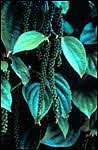
Piper nigrum is a tropical plant that grows in countries with a strong seasonal monsoon period followed by diminishing rain and concluding with a dry period that encourages the berries to fully ripen. There is a seven to eight-month period between the time the flower is pollinated and the harvest.
Peppercorns grow on a vine supported by a stake or host tree. A pepper vine can grow to lengths of 100 feet. The plant requires three years to mature and produce peppercorns, but the vines will continue to be fruitful for years.
Pepper is made from the berries of the pepper plant (Piper nigrum), a climbing vine native to the East Indies.
Black peppercorns are picked when green and dried in the sun until they turn black.
White peppercorns are allowed to ripen on the vine, the berry is fermented & its red-brown skin is removed.
Green peppercorns are picked while green and not yet ripe. They are then freeze-dried, dehydrated or packed in brine or vinegar.
Pink peppercorns are the dried berries of the Baies rose plant, mostly grown on Reunion and Madagascar, but actually native to South America
Black pepper is the number one selling spice in America. Americans consumed more than 112 million pounds of pepper in 2006, an increase of nearly 80 percent during the past two decades.
King Rameses II, an King of ancient Egypt, was found with peppercorns in his nasal cavity as part of the mumification ritual.
Most black pepper is grown in India, Indonesia, Brazil, and Vietnam.
"Sprinkle with pepper and serve" - the last step in a recipe for diced pork and apples from the world's oldest surviving cookbook, De Re Coquinaria ("On Cookery"), attributed to the 1st century Roman gastronome Apicius.
In Elizabethan times, pepper was sold by the individual grain, and guards on the London docks had their pockets sewn up so they couldn’t steal any spices.
In 408 A.D. the Visigoths attacked Rome and demanded 3,000 pounds of pepper as part of the city's ransom.
During the middle ages, peppercorns were accepted in lieu of money for dowries, rent and taxes.
Pepper was used as currency in ancient Greece and Rome.
Throughout history, pepper has frequently been valued equal to or more than gold!
Many things have been used to adulterate pepper, including juniper berries, pea flour, mustard husks, and papaya seeds.
The first American millionaire was Elias Haskett Derby, who made his money importing black pepper. He used his fortune to endow Yale University.

You are here > Home > FOOD TRIVIA & FACTS >
Please feel free to link to any pages of FoodReference.com from your website.
For permission to use any of this content please E-mail: james@foodreference.com
All contents are copyright © 1990 - 2025 James T. Ehler and www.FoodReference.com unless otherwise noted.
All rights reserved. You may copy and use portions of this website for non-commercial, personal use only.
Any other use of these materials without prior written authorization is not very nice and violates the copyright.
Please take the time to request permission.
FOOD TRIVIA and FOOD FACTS
Also see: Food Articles and Cooking Tips
Popular Pages
Home | Articles | FOOD TRIVIA | Today in Food History | Food Timeline | Recipes | Cooking_Tips | Food Quotes | Who’s Who | Culinary Schools & Tours | Food_Trivia_Quizzes | Food Poems | Free_Magazines | Food Festivals & Events

FoodReference.com (since 1999)
FOOD TRIVIA and FOOD FACTS SECTION