MUSTARD GREENS
In a 14th century Italian cookbook there are as many recipes for mustard greens as those for any other vegetable, yet mustard greens are virtually unknown in Italy today.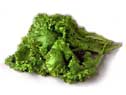
Mizuna (Brassica juncea var. japonica) also known as Xiu Cai, Kyona, Japanese Mustard, Potherb Mustard, Japanese Greens and California Peppergrass.
Mizuna is a Japanese mustard green with dandelion-like jagged edge green leaves with a mild, sweet earthy flavor. It has been culitaved in Japan since ancient times, but most likely originated in China. Mizuna makes an excellent salad green, and is frequently found in Mesclun. It is also used in stir-frys and soups.
Mustard greens are the most pungent of the cooking greens and lend a peppery flavor to food. They originated in the Himalayan region of India more than 5,000 years ago.
Like many other cooking greens, mustard can be found in many Chinese, African-American, and southern dishes.
Brassica juncea, the mustard plant, is characterized by it’s crumpled or flat leaves that may have scalloped, frilled or lacy edges. In addition, this plant produces the brown seeds that are used to make Dijon mustard.
Mustard greens are an excellent source of both vitamins A and C and contain several other vitamins and minerals as well as fiber and protein.

You are here > Home > FOOD TRIVIA & FACTS >
Please feel free to link to any pages of FoodReference.com from your website.
For permission to use any of this content please E-mail: james@foodreference.com
All contents are copyright © 1990 - 2025 James T. Ehler and www.FoodReference.com unless otherwise noted.
All rights reserved. You may copy and use portions of this website for non-commercial, personal use only.
Any other use of these materials without prior written authorization is not very nice and violates the copyright.
Please take the time to request permission.
FOOD TRIVIA and FOOD FACTS
Also see: Food Articles and Cooking Tips
Popular Pages
Home | Articles | FOOD TRIVIA | Today in Food History | Food Timeline | Recipes | Cooking_Tips | Food Quotes | Who’s Who | Culinary Schools & Tours | Food_Trivia_Quizzes | Food Poems | Free_Magazines | Food Festivals & Events

FoodReference.com (since 1999)
FOOD TRIVIA and FOOD FACTS SECTION