See also: Article on Lemons; Lemon Quotes; Citrus Fruit
LEMON TRIVIA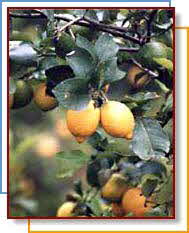
Lemons are believed to have originated in Southeast Asia, and spread to Spain and North Africa during the Middle Ages. The cultivated variety is thought to be a hybrid of wild species of lime and citron. Lemon trees bloom throughout the year, and fruit is picked 6 or more times a year, with an average commercial tree yielding about 1,500 lemons per year.
Third century Romans believed that the lemon was an antidote for all poisons.
Lemonade was a favorite of the Chinese Emperors. Lemons made their way to the United States with the help of Catholic Missionaries and were planted in Arizona and California.
There are two different types of lemons — acid and sweet. The most common acid varieties include Eurekas and Lisbons. The acidic type is grown commercially and the sweet types are grown mainly by home gardeners. The trees bloom continuously all year and can produce up to 500 or 600 lemons a year.
CDC.gov - 5 a Day
Lemons contain 30 to 45 percent juice depending on variety, climate, maturity when harvested, and storage conditions. The extracted juice contains between 4.5 and 8.5% organic acids (mostly citric).

You are here > Home > FOOD TRIVIA & FACTS >
Please feel free to link to any pages of FoodReference.com from your website.
For permission to use any of this content please E-mail: james@foodreference.com
All contents are copyright © 1990 - 2025 James T. Ehler and www.FoodReference.com unless otherwise noted.
All rights reserved. You may copy and use portions of this website for non-commercial, personal use only.
Any other use of these materials without prior written authorization is not very nice and violates the copyright.
Please take the time to request permission.
FOOD TRIVIA and FOOD FACTS
Also see: Food Articles and Cooking Tips
Popular Pages
Home | Articles | FOOD TRIVIA | Today in Food History | Food Timeline | Recipes | Cooking_Tips | Food Quotes | Who’s Who | Culinary Schools & Tours | Food_Trivia_Quizzes | Food Poems | Free_Magazines | Food Festivals & Events

FoodReference.com (since 1999)
FOOD TRIVIA and FOOD FACTS SECTION