TUNA FROM THE GRILL
See also: Tuna Trivia; Tuna Quotes Red wine enthusiasts who don’t want to give up steak but find their girth too thick to their liking can easily turn to tuna. It is much like meat in texture and colour, but much healthier. Tuna steak has approximately 40 percent of the calories and five percent of the fat per 100 gram of porterhouse steak. It is an ideal alternative to eating a juicy steak providing the tuna is cooked properly – overcooked tuna is dry and unappealing.
Tuna is much more versatile than white fish like cod and sole. You can serve it raw, pan-fry, grill, or bread and fry. The meatiness comes from muscles developed while swimming non-stop in an effort to take in oxygen-rich water, needed because tuna is warm blooded. This huge fish can be found in temperate climate waters all over the globe and are available throughout the year. In the summer months, they swim from the Gulf of Mexico to the mid-Atlantic and New England coast, and tuna from the waters of Central and South America swim up to southern California.
The quality improves over the course of the summer and early fall as they beef up on fatty herrings. September and October are peak tuna months.
Blue fin is the ultimate for many with its high fat content, especially the belly, which the Japanese call tero, and pay a fortune to taste. They like it raw with just a little soy sauce mixed with wasabi, and pickled, thinly sliced ginger. Blue fin is an over fished species, and rare.
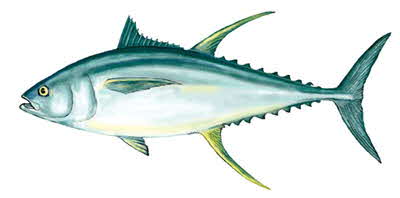
In Baja California blue fin tuna are kept in marine “feedlots” where the fish receive a constant sardine ands anchovy diet in converted salmon pens. They are expensive and only used for the most expensive Japanese restaurants with clients willing to pay for such luxuries. Yellow fin is the workhorse tuna. It has a mild flavour, rich red colour and firm texture, but lacks the fat content of blue fin or big eye tuna. It is consistent, plentiful, and attractively priced.
Big eye tuna is not on the endangered species list, but may be in trouble. In Hawaii the term ahi is used interchangeably for yellow fin or big eye tuna.
Albacore tuna is almost exclusively canned, although some chefs use it fresh. The white flesh is more oily with a stronger flavour than most other tuna. It can take aggressive seasoning. Bonito has white flesh, with a milder taste than albacore. Unlike beef, which is government graded both in Canada and the U S A, tuna is graded by the industry using the Japanese model. No 1 has high fat content with good clarity, and colour, No 2 is similar but less fatty. No 3 tuna has an unappealing brown colour and slightly bitter taste.
Tuna is cut into four triangular loins off the spine, and boneless steaks of varying sizes and thickness cut from head to tail.
When buying tuna, look for bright red flesh without any browning or dry spots. The meat should be firm without separations.
As with good beef, tuna should be cooked rare to medium rare, and never use a steak less than 2 ½ centimetres thick as it cooks much faster than meat. Brush liberally with oil before grilling and cook for about two minutes (rare) on each side on a hot grill. Grilled tuna is best served with a dipping sauce, soy, garlic, toasted sesame oil, and thinly sliced marinated ginger or pan-fried in olive oil, lemon juice, chopped chervil and oregano, or pan-fried and enriched with red wine, capers and chopped chervil.
Grilled or seared tuna can be matched successfully with a well-made Ontario Pinot Noir, or medium bodied Meritage or Cabernet franc, Moulin-a-Vent or Valpolicella Classico, even light Chianti Classico.
Article contributed by Hrayr Berberoglu, a Professor Emeritus of Hospitality and Tourism Management specializing in Food and Beverage. Books by H. Berberoglu
|