Trout: Fit For a KingFOOD FOR THOUGHT - April 26, 2006 - Mark R. Vogel - Epicure1@optonline.net - Archive (Recipe below)
In 1812, with nearly 700,000 men, Napoleon Bonaparte, self-crowned emperor of the French and self-proclaimed king of Italy, embarked on his ill-fated plan to invade Russia. It was the beginning of the end. Having overextended his forces, much like Hitler would do over a century later, Napoleon’s outnumbered army was forced into a devastating retreat. Sporadic skirmishes, dwindling supplies, disease, famine, desertion, and the infamous Russian winter reduced Napoleon’s Grande Armee to 22,000 men. One of the casualties was Chef Dartois Laguipiere. Laguipiere was a well known chef and has had many dishes named after him in his honor. One of the dishes he prepared for Napoleon was trout, marinated in olive oil and lemon, grilled, and then served with a mâitre d’hôtel sauce, (a sauce made from butter, lemon juice, parsley and seasonings). 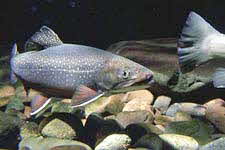
Trout are a nightmare to classify because of the number of species, intra-species variation, and hybridization, including the intermingling of native and foreign strains. Nevertheless trout, which are related to salmon, are generally speaking, a freshwater fish found in the cooler watered streams and lakes of North America and Europe. A few types of trout do migrate from freshwater to salt water during their lifespan.
The flesh of trout is usually firm but depending on the habitat and diet, can range in appearance from white to almost salmon colored. The taste can also vary a great deal, especially between wild and farmed trout. Most trout contain a low to medium fat content. One exception, Lake Trout, is high in fat and can be quite oily. Trout are sold whole, filleted, frozen, canned, smoked and kippered, (cured via salting, drying, and smoking). 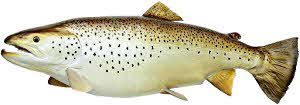
Trout is one of the most widely farmed fish. In 15th century Europe, Brown Trout were one of the first types of fish to be bred. American hatcheries surfaced in the 19th century in order to replace the native population depredated by over fishing and pollution. Most agree that although farmed trout is still quite tasty, it’s not on the same, ahem, scale as wild trout.
Rainbow Trout, which originated in the American west, are the most commonly farmed species of trout. Their name is derived from the speckled, pinkish array of colors running along their midline. Although they can attain 50 lbs or more, they are usually sold under ten pounds and more commonly in the 12 oz. to 3 lb. range. Steelheads are Rainbows that migrate to the sea. Brown Trout, originally from Europe, were transplanted in America in the 19th century. Also capable of considerable size, they are more commonly found in the low poundage range. Brook Trout are small, but considered by many to be the best tasting trout. They are indigenous to the eastern US but like the Rainbow, have been transplanted throughout the country. Usually not topping six pounds, Brook Trout are sold weighing around a pound or less. Lake Trout, as stated, have a high fat content and are most amenable to smoking. They are found in the northern US and Canada.
Trout can be prepared in many different ways and a number of classic preparations exist. Trout fillets can be sautéed, pan-fried, deep-fried, and steamed. Thicker cuts can be grilled or broiled. Whole trout can be baked or grilled. Trout amandine, (not almondine which is a misspelling), is trout sautéed in butter and topped with almonds. Trout Meuniére is trout dusted with flour, sautéed in butter and served with beurre noisette, i.e., browned butter, which is butter cooked until browned. Trout au bleu is trout freshly killed, and immediately plunged into a vinegary court bouillon, (an aromatic poaching liquid), and then served with butter or hollandaise sauce. Trout is a good choice for cooking en papillote, a technique whereby food is cooked wrapped in parchment paper. The food gives off steam which is entrapped within the paper housing and produces a delicious and delicately cooked victual. And in Corsica, detouring from the white wine/fish rule, trout is cooked in red wine and aromatics in a long-handled pan called a poêlon.
RECIPE - TROUT WITH HORSERADISH SAUCEThis recipe comes from James Ehler, a chef from Key West Florida, and publisher of this website.
Serves 2
Ingredients: • One cup dry vermouth or white wine
• Two 4-6 oz. trout fillets
• Salt and pepper to taste
• Half cup sour cream
• 2 Tbsp. white horseradish, drained
• 1 tablespoon fresh dill, minced
• 2 small cucumbers, sliced
Directions: Bring the vermouth or wine to a rolling boil in a pan designed to hold a steamer insert.
Season the trout with salt and pepper.
Add the trout to the steamer, cover, and steam for 9 to 10 minutes. Remove the trout and allow to cool.
Combine the sour cream, horseradish and dill.
Serve the trout cool or fully chilled with the dressing. Garnish with cucumber slices.
|