PUTTANESCA SAUCE HISTORYLADIES OF THE EVENING:Puttanesca sauce, most often employed for pasta, originated in Naples. It is made from tomatoes, black olives, capers, anchovies, onions, garlic, and herbs, usually oregano and parsley but sometimes also basil. It is an easy sauce, briefly cooked, and is very fragrant and spicy. Puttanesca translates as “in the style of the whore.” The name derives from the Italian word puttana which means whore. Puttana in turn arises from the Latin word putida which means stinking. -- Recipes below Now I’ll bet your wondering how this tasty dish became associated with such sordid content. As is often the case when sifting through culinary history, there are multiple explanations. The first interpretation is that the intense aroma, (harking back to the “stinking” Latin definition), would lure men from the street into the local house of ill repute. Thus, the Napolese harlots were characterized as the sirens of the culinary world. 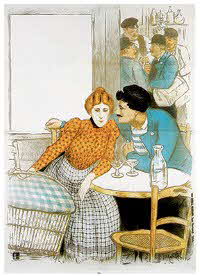
Three additional accounts all hinge on the fact that Puttanesca sauce is easy and quick to make. The first is that the prostitutes made it for themselves to keep the interruption of their business to a minimum. The second is that they made it for the men awaiting their turn at the brothel. And the final version is that it was a favorite of married women who wished to limit their time in the kitchen so that they may visit their paramour.
Whatever its origins, Puttanesca is a tasty and vibrant sauce. I like it best with spaghetti or on top of chicken breasts. There are many different recipes, most of them varying on the amounts of the ingredients. Indeed, the basic recipe is flexible. Below is the recipe I use but feel free to alter individual items according to taste.
RECIPES:
SPAGHETTI PUTTANESCAIngredients • 1 lb spaghetti or the pasta of your choice
• 1 medium onion, chopped
• 1 (2 oz.) can of anchovies
• Pinch of hot pepper flakes, (more or less to taste)
• Salt and pepper to taste
• Olive oil as needed
• 4 cloves garlic, chopped
• 1 (28 oz.) can of plum tomatoes, including the juice.
• 2 tablespoons capers
• ½ cup chopped black olives, (about 25 small olives)
• Oregano, chopped, to taste
• Parsley, chopped, to taste
• Grated Parmesan cheese to taste
Directions Boil the pasta while making the sauce but try to time it that the sauce is done first. Better the sauce simmer for a few extra minutes waiting for the pasta than the reverse. Remove the pasta just a little before it is done so you can finish cooking it in the sauce. Sweat the onion, anchovies, hot pepper, salt and pepper in a generous amount of olive oil until the onions soften and the anchovies disintegrate somewhat. Break the anchovies up with a wooden spoon as they sweat. Go easy on the salt since many of the ingredients are already salty. Add the garlic and cook one minute more.
Next add the tomatoes and their juices, breaking them up with a masher or wooden spoon as you bring them to a boil. Add the capers and olives, reduce the heat and simmer uncovered for 8-10 minutes. Add the almost done pasta and cook until the pasta is al dente. Check for additional salt and pepper. Finish with the oregano, parsley and cheese and serve. Oregano by the way is one of the few herbs that aren’t that bad in dried form. Fresh is always best but you can by with dried oregano. The parsley however, must be fresh. Dried parsley is an insipid and grim shadow of its fresh counterpart. Interestingly, black olives are an ingredient in numerous recipes considered to have aphrodisiacal properties. Moreover, they are rumored to specifically increase the female libido. Maybe that’s what put the eroticism in Puttanesca sauce? On that note, here’s my recipe for what I call Italian salsa. Black olives are substituted for peppers and basil for cilantro. I serve it in martini glasses as an appetizer but you could also use it as a topping for bruschetta. Like salsa, it tastes best after an extended rest, (which allows the flavors to meld more thoroughly) and served at room temperature. You can rest it in the fridge overnight and then take it out at least an hour before service. Make sure the tomatoes are fully ripe.
ITALIAN SALSA RECIPEIngredients 5 ripe plum tomatoes, chopped
3 cloves garlic, minced
20 small black olives, chopped
2 tablespoons coarsely grated Parmesan cheese
Basil, chiffonade, to taste
1 tablespoon extra virgin olive oil
1 ½ teaspoons balsamic vinegar
Salt and pepper to taste
Directions Combine the tomatoes, garlic, olives, Parmesan and basil. Pour the oil and vinegar in a bowl and whisk it until an emulsion is formed. Pour this over the tomato mixture and add salt and pepper to taste. FOOD FOR THOUGHT - Mark R. Vogel - Mark’s Article Archive |