Food Reference Website Logo

Foodreference.com - Articles & Features Section
Articles, Essays, News & Interviews about food & beverages -  History, Culture, Science and More

. Home . . Articles & Features . . Food Trivia . . Cooking Tips . . Recipes . . Quotes . . Who's Who . . Food Timeline . . Food Videos . . Food Trivia Quizzes . . Crosswords . . Humor & Poetry . . Cookbooks . . Food Posters . . Magazines & Catalogs . . Flowers . . Key West . . Gourmet Tours . . Cooking Schools . . Festivals & Shows .

You Are Here > 

 HomeArticles & FeaturesFood Safety, Allergies, Dangerous Foods etc. >  Bugs for Breakfast? >

Next

Bookmark and Share 


3 Young Chefs
Click on the
3 Young Chefs
for the best
Culinary Schools
Restaurant, Hospitality & Hotel Management Schools

Get a Free Trial issue!
SAVEUR
SAVEUR
The Award-Winning magazine that celebrates the people, places and rituals that establish culinary traditions


See Also: Trivia/Facts & Cooking Tips  


Bugs For Breakfast???

What would happen if you opened your cereal box and found insects where the raisins should be? You would be ticked off, to say the least. You would probably write a letter complaining to the cereal company!

But that letter wouldn't do much good. That's because nine times out of 10, it's not the food company's fault if insects get into their product. Pests usually bore or sneak into packages during transportation or in storage warehouses, according to Agricultural Research Service entomologist Michael Mullen in Manhattan. --Not the Manhattan in New York near the Statue of Liberty. The other Manhattan, the one in Kansas, where the tornado carried off Dorothy and Toto to Oz!

bugs on foodMullen works at the Grain Marketing and Production Research Center. There, he's been helping food and feed manufacturers design insect-proof packages because the food industry faces restrictions on using chemical pesticides on and near food products.
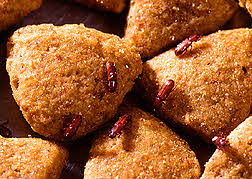
Mullen and his fellow bug scientists say there are two kinds of stored product insects: invaders and penetrators. Invaders include pests with wacky names like the confused flour beetle and the saw-toothed grain beetle. These critters sneak into food containers through cracks, crevices and holes.

Penetrators aren't so sly. These guys--the lesser grain borer, cigarette beetle, warehouse beetle and rice moth, for example--simply chew holes in the packages. They can bore through one or more layers of packaging--cardboard, plastic, you name it.


Ever wonder why the plastic liner in breakfast cereal boxes is so strong and tight? --Because insects home in on packages that let food odors escape. Those inner liners have to create a strong, airtight seal. Also, a plastic film "overwrap"--that fits tightly around a package--prevents insects from smelling the contents.
 
Other solutions to keep insects out of food and feed include: changing the type or pattern of glue on box seals and using extra reinforcement on the bottom of bags and boxes.

How can you tell if a package is insect-proof? Guessing won't work, so Mullen developed scientifically proven lab tests. They tell whether the packaging materials really do keep insects out. His tests have led to insect-resistant, pesticide-free packages for dry pet foods, raisins, baby cereals, pancake mixes and breakfast cereals.

After taking Mullen's suggestions, one company reported 75 percent fewer consumer complaints from insect-related problems. That's a lot fewer letters from angry moms!

--By Linda McGraw, formerly Agricultural Research Service, Information Staff
Text and Photo courtesy of
www.ars.usda.gov
 

TOP


Food Safety, Allergies, Dangerous Foods etc.• •Recalls & Food Complaint Resources• •Allergies, Food• •Almonds: New Regulations• •Bugs for Breakfast?• •Canned Food Defects• •Chicken, Choosing Safe, Healthy Chicken• •Ciguatera Poisoning• •Cleaning Kitchens• •Cooking Temperatures• •Defrosting Food Safely• •Ergotism: A Witch in the Rye• •Expanding Sausage Package• •Fall Winter Food Safety• •Fish and Pregnancy• •Food Safety - How Safe is Our Food?• •Gluten Intolerance & Wheat Allergies• •Growth Hormones & Milk• •Holiday Cooking Safety Tips• •Homemade Ice Cream Safety• •Hurricane Food Safety• •Kitchen Sponges & Bacteria• •Labels, New Food Labeling Law• •Listeria Contamination• •Mercury and Seafood• •Molds on Food• •MSG, Food Safety & Allergies• •Non Dairy Milk & Cheese• •Nut Allergies• •Plastic and Microwave Ovens• •Pork and Trichinosis• •Red Kidney Bean Poisoning• •Rice and Allergies• •Salad Bars, Are They Safe?• •Summertime Food Safety Hints• •Summer Picnic Food Safety• •Vibrio & Shellfish


. Home . . About & Contact . . Cooking Tips . . Facts & Trivia . . Website Bibliography . . Food Links .


Please feel free to link to any pages of FoodReference.com from your website.
No permission is necessary to link to our pages.

For permission to use any of the content on FoodReference.com please contact:  james@foodreference.com

All contents of this website are copyright © 1990 - 2009 James T. Ehler and FoodReference.com unless otherwise noted. All rights reserved. You may copy and use portions of this website for non-commercial, personal use only. Any other use of the materials in this website without prior written permission is prohibited.


OTHER FEATURES

Recipe Contests
Food Festivals
Holiday Features
Football Food
Today in Food History
Food Trivia Quizzes
Recommended CookBooks
 

Food Posters & Art


Unique Food Posters


Free Magazines