See also: Tarragon: The Dragon Herb
TARRAGON
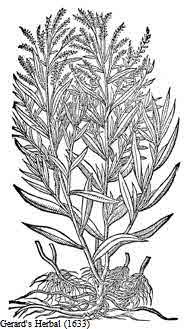
Tarragon
Artemisia dracunculus
Tarragon is the dried leaves of the herb Artemisia dracunculus. The slender dark-green leaves have a pleasant anise-like flavor and aroma.
Tarragon blends well with other spices. It is used in sauces, especially Bearnaise sauce and tarragon vinegar. In French cuisine it is an integral part of fines herbes and dijon mustard.
Tarragon was used by the Greeks as early as 500 BC. The Arabs named it “turkhum” which means dragon probably because they found the taste to be exceptionally strong or because of its serpentine shaped roots. The tradition has been continued by the French who call it “estragon.”
Tarragon came to France from the plains of Siberia in the 15th century by the Arabs who had been using it since the 13th century.
Tarragon leaves are rich in iodine, mineral salts and vitamins A and C. In the past tarragon was used to prevent scurvy. It is also used as an appetite stimulant and digestive tonic by naturalists.
Florida Dept of Agriculture

You are here > Home > FOOD TRIVIA & FACTS >
Please feel free to link to any pages of FoodReference.com from your website.
For permission to use any of this content please E-mail: james@foodreference.com
All contents are copyright © 1990 - 2025 James T. Ehler and www.FoodReference.com unless otherwise noted.
All rights reserved. You may copy and use portions of this website for non-commercial, personal use only.
Any other use of these materials without prior written authorization is not very nice and violates the copyright.
Please take the time to request permission.
FOOD TRIVIA and FOOD FACTS
Also see: Food Articles and Cooking Tips
Popular Pages
Home | Articles | FOOD TRIVIA | Today in Food History | Food Timeline | Recipes | Cooking_Tips | Food Quotes | Who’s Who | Culinary Schools & Tours | Food_Trivia_Quizzes | Food Poems | Free_Magazines | Food Festivals & Events

FoodReference.com (since 1999)
FOOD TRIVIA and FOOD FACTS SECTION