OYSTERSSee also: The World is your Oyster - Oyster Recipes - Oyster Trivia The cultivation of oysters began more than 2,000 years ago when Romans collected oyster seed stock near the mouth of the Adriatic Sea and transported them to another part of Italy for grow-out. The Romans had such a passion for oysters that they imported them from all over the Mediterranean and European coasts.
Oysters flourish in estuaries where nutrient-rich fresh water meets the salt water and feed mainly on single-cell plants. When feeding, the oyster can pump and filter 25 gallons of water in 24 hours. Florida's estuaries provide suitable conditions and a plentiful food supply for Eastern oysters (Crassostrea virginica) to grow rapidly. They can reach marketable size in less than two years; whereas, it may take oysters up to six years to reach marketable size in colder northern waters. When traveling along the Gulf Coast, you may see oysters being harvested commercially from small boats by fishermen using large, long handled tongs to scoop clumps of oysters from the bottom. 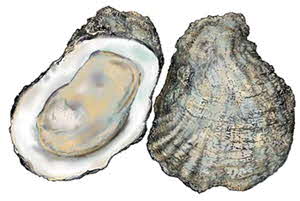
OYSTER ATTRIBUTES
Tender to firm texture, flavor varies from salty to bland. Extra lean.
HOW MUCH TO BUY
• In-shell oysters: 6 whole oysters per serving.
• Shucked oysters: 1/3 to 1/2 pint per serving
BUYING, STORAGE AND HANDLING Live Oysters:
• Remember to purchase seafood last and keep it cold during the trip home.
• Live oysters should close tightly when tapped.
• Discard any oysters that don't close; this is an indication that the shellfish are dead.
• They should have a mild odor, similar to the ocean.
• Live oysters should be free of cracks.
• They will remain alive for up to seven days in the refrigerator when stored at a constant 41 degrees F in a container with the lid slightly open.
• Drain excess liquid daily.
Shucked Oysters:
• Remember to purchase seafood last and keep it cold during the trip home.
• Oysters have a fresh odor when freshly shucked.
• A clear, slightly milky or gray liquid should surround freshly shucked oysters.
• Freshly shucked scallops should have very little liquid in the package
• Refrigerate shellfish in a sealed container on ice or in the coldest part of the refrigerator.
• Store shucked oysters up to five days.
PREPARATION • Keep raw and cooked seafood separate to prevent bacterial cross-contamination.
• After handling raw seafood thoroughly wash knives, cutting surfaces, sponges and your hands with hot soapy water.
• Always marinate seafood in the refrigerator.
• Discard marinade; it contains raw juices which may harbor bacteria.
• When marinade is needed for basting reserve a portion before adding raw seafood.
COOKING • Wash live oysters thoroughly under cold running water prior to cooking.
• Steamed or grilled: cook until shell opens.
• Shucked oysters: bread and fry in oil for 3 to 4 minutes at 375 degrees F.
• Shucked oysters: bake for 10 minutes at 450 degrees F.
NUTRITION
Nutritional values for approximately 4 ounces (114 grams) of raw, edible portions
• Calories 80
• Calories From Fat 20
• Total Fat 2 g
• Saturated Fat .5 g
• Cholesterol 55 mg
• Sodium 190 mg
• Total Carbohydrates 4 g
• Protein 9 g
OYSTER HEALTH ADVISORY
If you eat raw oysters you need to be aware that certain health conditions put some people at risk of serious illness or death and these people should not eat raw oysters. Vibrio vulnificus is a bacterium that occurs naturally in marine waters. It is not a threat to most healthy people, but Vibrio vulnificus can cause sudden chills, fever, nausea, vomiting, blood poisoning and death within two days in people with certain medical conditions. The presence of the bacteria is not a result of pollution or poor product handling. Eating oysters from "clean" waters or in reputable restaurants with high product turnover does not provide protection.
Fully cooking oysters completely kills the bacteria, so you can continue to enjoy oysters in many cooked preparations. When dining at restaurants, order oysters fully cooked if you have one of the risk conditions. Eating raw oysters with hot sauce or while drinking alcohol does NOT kill the bacteria.
You are at risk of being infected by Vibrio vulnificus if you have any of the following conditions: • Liver disease, either from an excessive alcohol intake (two to three drinks daily), viral hepatitis or other causes. (Liver disease will put you at increased risk for Vibrio vulnificus infection from raw oysters. The risk of infection is 200 times greater for individuals with liver disease than those without liver disease.)
• Iron disorder hemochromatosis.
• Diabetes.
• Cancer.
• Stomach problems, including previous stomach surgery and low stomach acid (for example, from antacid use).
• Immune disorders, including HIV infection long-term steroid use, e.g., asthma and arthritis
If you are an older adult, you may be at greater risk of having these conditions than a younger person. If you are or think you may be in any of these risk categories, you should not eat raw oysters. If you are unsure of your risk check with your doctor. Florida Department of Agriculture and Consumer Services www.fl-seafood.com
|