CATFISH
FARM-RAISED CATFISHChannel catfish, (Ictalurus punctatus) are produced from 177,360 acres of catfish ponds in Florida, Mississippi, Alabama, Arkansas and Louisiana with an annual yield of 470 million pounds. The channel catfish is the only spotted North American catfish with a deeply forked tail and bluish, to olive-green back shading to a white belly. They are raised in a quality-controlled environment of clay-based ponds filled with pure fresh water pumped from underground wells. The average pond, constructed by building above-ground levees to serves as natural barriers, is 10 to 20 land acres in area and 4 to 6 feet deep.
Farm-raised catfish are fed a puffed, high-protein floating food pellet (a mixture of soybeans, corn, wheat, vitamins and minerals). This specially formulated feed is one of the reasons for the catfish's subtle taste and lack of "fishy" odor. At 18 months old (averaging 1 to 11 1/2 pounds), farm-raised catfish are harvested with seines (large, weighted nets) and loading baskets and shipped in aerated tank trucks to the processing plant. Catfish are kept alive until processed, making them among the freshest freshwater fish available.
Genuine U.S. farm-raised catfish is ranked the fifth most popular fish consumed in the United States after shrimp, tuna, and cod.
See also: Catfish Recipes - Catfish Trivia - Catfish Quotes 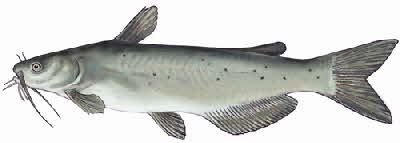 |
FARM RAISED CATFISH ATTRIBUTESFirm texture, white meat with mild flavor. Lean fish.
SUBSTITUTE SPECIESMahi-Mahi, Grouper.
HOW MUCH TO BUY• Whole or drawn fish: 3/4 to 1 pound per serving.
• Dressed or cleaned fish: 1/2 pound per serving.
• Fillets or steaks: 1/4 to 1/3 pound per serving.
BUYING, STORAGE AND HANDLINGRemember to purchase seafood last and keep it cold during the trip home.
Fresh whole fish should have:
-- A shiny surface with tightly adhering scales.
-- Gills that are deep red or pink, free of slime, mucus and off-odor.
-- Clean shiny belly cavity with no cuts or protruding bones.
-- A mild aroma, similar to the ocean.
Fresh steaks, fillets and loins should have:
-- A translucent look.
-- Flesh that is firm and not separating.
-- A mild odor, similar to the ocean.
-- No discoloration.
-- Packaging that keeps them from being bent in an unnatural position.
PREPARATION• Keep raw and cooked seafood separate to prevent bacterial cross-contamination.
• After handling raw seafood thoroughly wash knives, cutting surfaces, sponges and your hands with hot soapy water.
• Always marinate seafood in the refrigerator.
• Discard marinade; it contains raw juices which may harbor bacteria.
• When marinade is needed for basting reserve a portion before adding raw seafood.
COOKING• The general rule is 10 minutes per inch of thickness, at the thickest part of the fillet or steak, at 400-450 degrees F.
• If fish is cooked in parchment, foil or a sauce, add 5 minutes to the total cooking time.
• Fillets less than 1/2 inch thick do not need to be turned during cooking.
• Fish cooks quickly. Do not overcook.
• Fish is done when the flesh becomes opaque and flakes easily when tested with a fork.
• Poaching, steaming, baking, broiling, sautéing, microwaving are excellent low-fat cooking methods, if you do not add high fat ingredients.
• Marinate in your favorite salad dressing prior to cooking.
• Broil, bake, steam or microwave, then cube and add to pasta or salad greens for a delicious salad.
• Broil or grill with lime-butter and seasoned salt.
• Oil the grill to prevent fish from sticking.
• Bake whole fish with a crab or shrimp stuffing.
• Add leftover fish in broken pieces to salads, soups or sauces.
NUTRITIONNutritional values for approximately 4 ounces (114 grams) of raw, edible portions • Calories 110
• Calories From Fat 25
• Total Fat 3 g
• Saturated Fat .5 g
• Cholesterol 60 mg
• Sodium 70 mg
• Total Carbohydrates 0 g
• Protein 21 g
Florida Department of Agriculture and Consumer Services www.fl-seafood.com
|