FoodReference.com Logo

Food Articles, News & Features Section

Home   |    FOOD ARTICLES   |    Food Trivia & Facts   |    Today in Food History   |    Cooking Tips   |    Recipes   |    Food Quotes   |    Who's Who   |    Videos   |    Trivia Quizzes   |    Crosswords   |    Food Poems   |    Food Posters   |    Cookbook Reviews   |    Shopping   |    Culinary Schools   |    Gourmet Tours   |    Food Festivals & Food Shows

You are here 

> Home  > Food Articles  > Baking  > Monkey Bread, An Introduction

Next


CULINARY SCHOOLS &
COOKING CLASSES

From Amateur & Basic Cooking Classes to Professional Chef Training & Degrees -  Associates, Bachelors & Masters
More than 1,000 schools & classes listed for all 50 States, Online and Worldwide


Culinary Posters and Art


An Introduction to Monkey Bread


By Dennis Weaver

Nancy Reagan served monkey bread in the White House, especially during the holidays.  It was a special, rich monkey bread made with tons of butter—almost brioche.  She used a butter-rich dough, cut the dough into balls, rolled the balls in more butter and then stacked then in a ring pan for baking.  The recipe was published by the American Cancer Society in 1985. 

Today most monkey breads are made similarly but instead of so much butter, they are covered with a sweet glaze.   The classic glaze is made of cinnamon and sugar, cinnamon monkey bread, but nuts or raisins are often added and glazes vary.  The steps for making monkey bread remain the same:
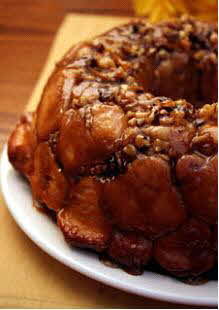
Monkey BreadStep 1: Mix the dough.
Mix the dough as you would for other bread recipes.  You can use your bread machine if you like.  Doughs for monkey bread are usually a little richer and may have an egg or two added.  Let the bread rise.

Step 2: Make the balls. 
The easiest way to make the balls is to roll the dough out on the counter and cut the dough into squares with a sharp knife or pizza wheel. Roll the chunks into balls.  They should be no larger than walnuts.

Step 3:  Coat the balls. 
There are two ways to coat the balls: dip the balls in butter and roll them in a sugar mixture or make a buttery slurry for the glaze and dip the balls in the slurry. For cinnamon monkey bread, dip the chunks in butter and roll them in a cinnamon and sugar mixture. 

FREE
"HOW TO BAKE"
From The Prepared Pantry


Be a better baker!  Get the most comprehensive home baking guide you have ever seen

Step 4:  Load the pan.  
Stack the balls in a bundt or other pan.  (Don’t use an angel food cake pan or springform pan since they may leak.)  Nuts or fruit can be added between layers if desired. If you want to top your monkey bread with nuts, place nuts in the bottom of the pan since the monkey bread will be inverted onto a platter after baking.

Step 5: Bake the bread. 
Bake the bread at 350 degrees or as directed by the recipe. Once baked, let the monkey bread cool in the pan for about five minutes before inverting on a platter. This gives the glaze a chance to set up a bit so that it does not run everywhere when inverted.   Serve the monkey bread warm and fresh.

There are a ton of variations to monkey bread.  We sometimes add a cup of jam to the glaze.  We may add almond or rum extract to the bread and fruit between the layers.  A chunk of cream cheese or a half dozen chocolate chips me be wrapped into the center of the balls.  A packet of non-instant butterscotch pudding is often used in the glaze.  Even savory instead of sweet monkey breads are made with cheese, onions, herbs, or bacon.  Once you learn how to make money bread, you can explore forever.  

Dennis Weaver is the author of “How to Bake”, a free 250-page e-book available at The Prepared Pantry.  The Prepared Pantry sells monkey bread mixes and pans for monkey breads and offers free “A Handbook for Making Monkey Bread” with recipes and techniques. 
 

TOP


RELATED ARTICLES:

The Muffin Man: English & American     |     Bread - The Staff of Life     |     Bread and your Freezer     |     Bread, Five Factors To Get Your Bread To Rise     |     Bread, High Altitude Breads     |     Bread, How Long Should My Bread Rise?     |     Bread, How To Make Easy Sourdough Bread     |     Bread, Secrets of Great Breads     |     Bread, Whole Grain Rice Bread     |     Bread, Why Do We Need To Knead?     |     Cake - Let Them Eat Cake     |     Cheesecake, How To Bake The Perfect Cheesecake     |     Cornbread, Hints and Tips for Better Cornbread     |     Flour: Types And Uses     |     Gluten Free Baking Mixes     |     Gluten, What It Is And Why Does It Matter?     |     Leavening: All Rise     |     Monkey Bread, An Introduction     |     Muffins: Tips On Making Muffins     |     Oats, Winning Tips for Baking with Oats     |     Pastry: Basic Ingredients     |     Pie, Tips for the Perfect Pie Crust     |     Sourdough     |     Yeast, How Yeast Works


Home     |     About Us & Contact Us     |     FOOD ARTICLES     |     Website Bibliography     |     Food Timeline     |     Other Food Links

Please feel free to link to any pages of FoodReference.com from your website.

For permission to use any of this content please E-mail: james@foodreference.com
All contents are copyright © 1990 - 2013 James T. Ehler and www.FoodReference.com unless otherwise noted.
All rights reserved.     You may copy and use portions of this website for non-commercial, personal use only.
Any other use of these materials without prior written authorization is not very nice and violates the copyright.

Please take the time to request permission.


POPULAR PAGES

  Beverage Articles
  Food Facts & Trivia
  Recipe Contests
  Food Shows & Festivals
  Recipe Category Index


Click here to buy posters at Allposters!


FOOD VIDEO SECTION
Recipe Videos, BBQ & Grilling, Food Safety, Food Science, Food Festivals, Beverages, Vintage Commercials, etc.


Order Free Food & Kitchen Catalogs


FREE Food & Beverage Publications
An extensive selection of free magazines and other publications for qualified Food, Beverage & Hospitality professionals