INSECTS AS FOODSee Also: Insects; Dog meat; Horse meat; Snails; Camels; 1871 Paris Siege Menu
Mammoth Meat; Mopane Worm Tastes Like Chicken?
Sci4kids from the USDA Agricultural Research Service (ARS) Feel like munching on a giant waterbug? How about nibbling a juicy grub or a crispy grasshopper fried up with zesty spices?
Hey, don't knock it until you try it, says Bill White, an Agricultural Research Service entomologist.
After a meeting earlier this year in the Thai city of Khon Kaen, Dr. White had a chance to sample some of these multi-legged snacks for lunch and at a banquet 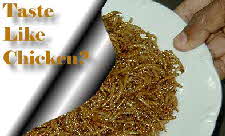
Science For Kids decided to get the scoop on this matter, and spoke with Dr. White by telephone at his office in Houma, Louisiana. There, Dr. White normally only studies insects, seeking ways to stop those with a destructive sweet-tooth for sugarcane crops. These pests include the larval offspring of this moth, an adult sugarcane borer.
But while in Thailand this past winter, he was introduced to an important staple food of the Thai people in that region: mealworms, grasshoppers, longicorn larvae, waterbugs and even scorpions--all roasted, fried, or spiced to taste.
"We ate a lot of insects," Dr. White recalls of that day. Most of the visiting entomologists in his group weren't native Thai, he says. But that sure didn't stop them from sampling various dishes of rice topped with a seasoned insect of choice.
"Some members in our group were nibblers," he says of the more cautious. Others had a heartier appetite, particularly an entomologist from France, where food preparation is practically considered art.
Yeah, but what's it like to chomp down on a mealworm?
Crispy, according to Dr. White: "The mealyworms were roasted." 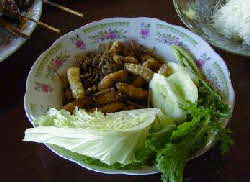
OK. How about those longicorn larvae (pictured here)? --Taste like chicken?
Nope. "They had a pecan flavor," he responds.
How do you eat a cooked, giant waterbug, and how big are these anyway?
"They're about three inches long, and can be eaten like an oyster," Dr. White says. "You have to pull the back legs off," he adds.
Sound gross?
Well, some people might say the same of cracking open a steamed crab, prying apart a lobster tail, peeling shrimp, or sucking juices from a boiled crawfish head, for that matter. It's all a matter of perspective. Of the insects he sampled, Dr. White said he only "had a ‘problem' with the bigger, gooey ones, the bigger larvae."
Believe it or not, eating insects was one of the highlights of Dr. White's trip to Thailand.
"As entomologists, our entomological prowess was challenged. In a way, it was a rite of passage," he jokes. "We were also amazed at the ready supply of insects and other unusual things--by Western standards-- available to eat in their markets."
Most important, he says, was the chance to experience another country's culture, and come away with a greater appreciation for it and the people.
--By Jan Suszkiw, Agricultural Research Service, Information Staff.
|